
Saturday, March 12, 2022

God's glory or our delight?

When all our focus and energy is on honoring God, you would think we would get lost in the process. However, it is just the opposite. It is when and where we "find ourselves" most, are most grounded, and experience our greatest fulfillment and joy.

We don't get lost, but our trying to find fulfillment on our own, apart from or outside of God does.

Even though our greatest fulfillment is found in valuing (worshipping) another (i.e. God, who is most valuable), it is no less ¹our fulfillment we are experiencing. 

Our fulfillment is legitimate and important not just to us, but also to God. He created us to experience and enjoy Him and find our greatest joy and fulfillment in Him in doing so.
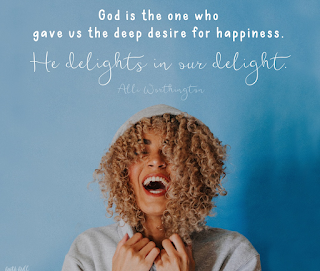
In turn, God experiences his own joy in bringing us joy. He is driven to bring the joy and delight in who He is - as Father, Son, and Spirit - to others in and through Himself who is the true source of life, love, and all things. God is thrilled when we delight in Him.
He finds great ²delight in doing this.

But all this is the result of honoring God, not the goal. To say it simply, ³our greatest joy (fulfillment) is bringing the highest honor ³to another, not in seeking joy itself i.e. for its own sake.  

Because we are in the image of God we are wired to focus on another and find greatest joy in doing so because this is exactly what happens between the Father and Son in, by, and through the Spirit.

And this is not just honoring anyone but the one Being that is most significant and honorable above all others and most worthy of all honor - the Creator and Giver of life, love, and all things.

If we truly desire to find our life, we must lose our life first, i.e. lose our hopes and attempts to find life outside of or apart from God. Because He is life. True life is ultimately and only in Him.

Related topics:


_________________________________

¹Our desire for fulfillment isn't in question. We are designed by God Himself to be filled, but only by Him. It is a matter of how we best experience fulfillment - by seeking it directly, independent of God, or by seeking God and, in doing so, finding our greatest fulfillment. The Bible says it is only possible in and by the latter.

The most amazing part is this is also central to the very being of God himself. The Father finds the greatest joy in exalting another - i.e. his Son - and the Son in exalting his Father. This delight, love, and joy is the essence of who God is. The delight between the Father and Son is so great it tangibly manifests as God's Spirit, the third person of our triune God. God is Spirit and He is Love. 

Because we are like God, we too find greatest fulfillment in this same way, i.e. by exalting another. God not only instructs us to this end and in this way but actually lives this Himself. This is who God is and who He calls us to be i.e. like Him...in His image.

²...Or do you suppose it is to no purpose that the Scripture says, 'He yearns jealously over the spirit that he has made to dwell in us' ”? - James 4:5 ESV

yearns -

ἐπιποθεῖ (epipothei)
Verb - Present Indicative Active - 3rd Person Singular
Strong's 1971: From epi and potheo; to dote upon, i.e. intensely crave possession.

spirit -

πνεῦμα (pneuma)
Noun - Accusative Neuter Singular
Strong's 4151: Wind, breath, spirit.

He caused to dwell

κατῴκισεν (katōkisen)
Verb - Aorist Indicative Active - 3rd Person Singular
Strong's 2730: To dwell in, settle in, be established in (permanently), inhabit. From kata and oikeo; to house permanently, i.e. Reside. The spirit He put within each of us did not disappear but is dormant due to our rebellious unbelief.

According to the above passage, there is something about us - our breath-spirit-life-being - he put in us that he values, prizes, longs (yearns) for, and seeks to engage.

What is that something? Our being like God - in his image. He longs for Himself in us - i.e. that which is like Him. Since he created us like himself - in his image - he also longs for us. He longs for and delights in us because we are like Him. 

God is all about giving because He already has all that he needs and is overflowing love within himself as the community of Father and Son in, by, and through the Spirit.

What kind of spirit has God put within us? A spirit that longs (is passionate) for infinite love i.e. God Himself. Love that can only be satisfied fully by the Source of love - our Creator; not by creation.  

He will not share in (is jealous over) our pursuit or loyalty to any other "lover" because He knows there is no other true lover who can fill this need and desire for love that He designed to be filled only by Him. This is "the spirit He has made to dwell in us."

Not because He needs our love but because we need His. This wasn't happenstance. He designed us this way. He is the Creator, we are created...but unlike the rest of creation we are created in His image. Therefore He loves us and desires we experience Him to the maximum of our capacity as bearers of His image. 

³And so it also is with God. His greatest joy is bringing delight to another. First, the Son brings joy to the Father, then the Father to his Son, and then out through the Son to us, his adopted sons and daughters who are like God.

God's delight is like a parent who gives a legitimate gift to a child that the child wants and enjoys. As parents, we delight in doing so when we know it's in their best interest - and when they appreciate the love conveyed to us through that gift and are not just enamored with the gift or drawn away from the Giver by it.

Sunday, March 6, 2022

God made the nations?

There is debate within the church of the validity of nations and/or borders. Does the Bible have anything to say about this? Let's see.

"The God who made the world and everything in it, being Lord of heaven and earth, does not live in temples made by man, nor is he served by human hands, as though he needed anything, since he himself gives to all mankind life and breath and everything.


And he made from one man every nation of mankind to live on all the face of the earth, having determined allotted periods and the boundaries of their dwelling place, (why?) that they should seek God, and perhaps feel their way toward him and find him."- Acts 17:24‭-‬26 ESV


It appears from the above passage that the nation/state is a valid entity. The important question is why? 

Due to man's rebellion towards God, man seeks to unite in that rebellion whenever possible. This was the problem at the tower of Babel. Man determined to combine his resources in order to "climb to the heights of heaven" i.e. to achieve heaven on earth and bring in the kingdom of heaven (bliss) to earth without God-Christ, the rightful King. (This is the current goal of one world government - driven by corporations and those who back and control them. They seek to capture and control the economic resources of mankind, often in order to fleece them - Though some genuinely seek to serve their fellow men and women). 

This is the result of mans rebellious attempt to exalt himself, and is directly contrary to God exalting man due to man humbling himself. 

Salvation is of the Lord only. Man cannot save himself...not permanently. As a result God had to divide them up by language i.e. into different people groups, which resulted in different ¹nations. Nations were instituted by God himself in response to man's rebellion. 

Man's greatest need is to be reunited with his Creator, not uniting together in their rebellion against Him. Some seek a one world government in order to acquire unlimited power and control over all the resources of creation and other creatures. They have no regard of God's intention for His creatures or creation. 

According to the above passage reconnecting with God best occurs when we are in our separate Nation/States i.e. so... "that they should seek God, and perhaps feel their way toward him and find him."

It appears nations and the borders needed to distinguish them is not only legitimate but the necessary and best way for humanity to reach out and seek God again.

To see if God has anything to say about immigrants or immigration click here.

For a discussion on values culture and racism click here.

For a discussion on racism and the necessity of forgiveness click here

For a discussion on what divides us click here.

For a discussion of the harmful nature of identity politics click here.

What is the nature of racial privilege? Click here for a discussion.
______________________________

¹To have different nations is to have boundaries or borders. While some object to this idea no one objects to having a fense or wall around their property or doors on their home. Why do we do this? We live in a broken world and therefore desire to protect those we value and cherish. 

To voluntarily invite someone into our home is a kind and loving thing but it's not wise if we invite people in who have ill intent towards us and our family. We would not invite liars, thieves, or murderers in our house for good reason. Heaven itself does not allow such people entry

Doorways are also entry ways through which we invite people we trust into the sacred dwelling place we call home so we might welcome, honor and serve them.


Saturday, February 19, 2022

Unbelief diminishs us

Because of our rebellious distrust of God and our subtle but passionate desire to make life work without him, we are no longer in a relationship with Him (as we were meant to be) and experiencing His infinite love (the necessary spiritual nourishment we were created and designed to have) with all the delight, bliss, and strength that comes from being connected to Him. As a result, we are stunted in our abilities and ¹never develop to our full God given potential. We are ¹far less than we were created to be. 

This is true not only spiritually and emotionally, but physically. As our health declines with age, we experience disease and eventually die. None of this was part of our original design. 

As well, our senses and abilities are only a fraction of what they were meant to be and we have the potential for (and will one day be if we are in Christ. In Christ, all of this will one day ultimately be reversed and eliminated).

If we are not restored to God, our diminishing abilities and the negative results will continue beyond our present existence and only increase. We will become even more fragmented, diminished and entrenched in the negative dispositions we now have and display, e.g. frustration, anger, fear, anxiety, depression, indifference to or even hatred of God, etc. 

Without connection and union with the Source of love and life we are like spiritual and emotional black holes collapsing in on ourselves from the void left by God's absence. We will only increase in our sense of emptiness. This will become even more acute over time with no chance of relief.

In our current existence we at least experience occasional temporary relief through the use of the various gifts that God gives us - both internal and external - but always with a constant search and hope for more (this drives all our actions when we are not connected and in union with God). 

In our next existence, without our Creator or access to His creation, we will be fully given over to our own devices and have no such experience or hope of love. We will have no access to the external gifts or the ability to exercise the internal ones, but only an perpetual longing and thirst for love - now masked by the use of God's gifts. This will be our hell.

So what is our problem? 

In this life, we try to build our sense of identity, meaning, purpose, and value trhrough ²everything but God. He is not our focus, His creation is - with access to and use of all the gifts this life brings us. 

However, created things are finite. We were created for the infinite.

If we refuse God's offer (again our choice) to restore us back to Him and our ³true identity, we will go into eternity continuing on this current trajectory. The difference is we won't have all the resources, blessings, and gifts we now enjoy and use to maintain our independence from God. 

Absent God, we attempt to use all things to maintain our sense of identity, meaning, value, and purpose. We are like rebellious children using all the good things our parents give us to avoid the very ones who gave them to us i.e. our parents.

If we return to God and abandon our rebellious attempts to make life work without Him, we will be restored to the true purpose of our existence, and experience our greatest potential, fulfillment, and the delight He longs to give us (you) in Him. Will you return?

"The Spirit and the Bride say, 'Come.' And let the one who hears say, 'Come.' And let the one who is thirsty come; let the one who desires take the water of life without price." - Rev 22:17

Are we truly rebels against God? For more click here.

Does God love rebels? Click here and find out. 

For a further discussion on why hell is our choice click here.
_______________________________

¹Not unlike a malnourished child genetically encoded to be a genius or an exceptional athlete who never developed to their full potential. As a result, they developed with less than average intelligence or become wheelchair-bound because they never received the proper nourishment they needed and were designed to have.

²We use all the good gifts of God - meant to show us his love - to maintain our independence from God. Not unlike a rebellious child using the good things his parent provides to betray his parents.

³His beloved image bearers who are designed to partake in the community of love between the Father, Son, and Spirit - and all the delight that comes with and in it - in the same way they do (because we are like Him).

Sunday, February 13, 2022

Full of grace and truth

When Christ walked among us He was characterized as being full of two qualities...

"And the Word became flesh and dwelt among us, and we have seen his glory, glory as of the only Son from the Father, full of grace and truth..." John 1:14

To describe him in this way indicates that both grace and truth define him and are central to his character.

At first glance these qualities may appear at odds and in tension with each other. Are they?

Truth points out the right way of doing things and exposes error. It is the opposite of a lie and can feel harsh on occasion e.g. to discover we are living a lie or a not being honest is unpleasant - i.e. it doesn't feel very gracious. But if we are living according to a lie this causes harm to others as well as ourselves. Lies have real consequences that must be addressed if we are to be loving to those negatively impacted.

Grace extends to us kindness we do not deserve (even when we are occasionally less than truthful and honest). This can appear to promote the opposite of living according to truth i.e. that it's ok to not be truthful when it isn't.

What makes Christ so unique and glorious is he did not back off the truth; that our rejection of truth (and His Son who declared himself to be the truth) causes harm and must be addressed (to allow lies to go unaddressed is not fair to those who are harmed by them). 

But he also didn't let the destructive consequences of our dishonesty or deception fall on us. He fully addressed it by taking those consequences onto Himself so we might not have to. That is grace. 

In doing so He did not compromise truth or abandon love but was faithful to both i.e. he was full of grace and truth.

16 For from his fullness we have all received, grace upon grace. For the law (truth) was given through Moses; grace and truth came through Jesus Christ. No one has ever seen God; the only God, who is at the Father’s side, he (Jesus) has made him (the Father) known. - John 1:16‭-‬18 ESV

The fullness of Christ is that he manifests the full spectrum of who God is. He is a God of truth but also a God of love.

...he has made him known...  

Christ being full of grace as well as truth showed us the loving nature of God i.e. He is not just a God of justice and judgment for our rebellion to and violation of His design (Gods will-truth - i.e. the true nature of how things are and were designed to operate) but He is also the God of love, compassion, kindness and grace.

Christ died 
to address the consequences of our rebellious distrust (because of truth i.e. violation of God's design-truth matters and the harm it causes must be addressed and because of His compassion-love). He provided a solution to our rebellion from His design without comproming the value and importance of that design, while at the same time taking action that prevents our rebellion from destroying us i.e. He also died because of love. He now leaves it up to us to accept His offer and provision to be in right standing (righteous) before God, but as a gift, not something we earn or can achieve. 

This is not only talking about God's faithfulness to us in our rebellion (grace) but His faithfulness to righteousness and truth.

We are also told Christ is a King and priest after the order of Melchizedek. Who this character is, is not as important as what he represents. 

1 For this Melchizedek, king of Salem, priest of the Most High God, met Abraham returning from the slaughter of the kings and blessed him, 2 and to him Abraham apportioned a tenth part of everything. He is first, by translation of his name, king of righteousness, and then he is also king of Salem, that is, king of peace. 3 He is without father or mother or genealogy, having neither beginning of days nor end of life, but resembling the Son of God he continues a priest forever. - Hebrews 7:1-3

Christ came declaring the good news of the Kingdom of God; the good news of His reign (rule) as King. But His is not just a righteous rule of justice (truth) but of love (grace, compassion).

There are even hints of this in the Old Testament before Christ came to us as a man.

Steadfast love and faithfulness meet; righteousness and peace kiss each other. - Psalm 85:10 ESV

God still demands faithfullness to what is right (truth) but he also meets those demands himself. Christ is both the Judge and the one who is judged (who took our judgment upon himself) within the same person. And that for our sake i.e. for love. Do you accept His offer?

For a discussion on why our rebellions distrust matters click here

For a discussion on why judgment is necessary click here

For a discussion on the value of tension and paradox click here.


Saturday, February 5, 2022

God loves rebels, not rebellion

God loved us in our rebellion from the very beginning. Why? 

Because: 

1. He is love and 

2. He also seeks to honor us - as bearers of His image - and our freedom to choose (even if it results in us not choosing Him and causing harm to ourselves and others). 

But what is the significance of this kind of embrace and pursuit of us?

By ¹pursuing and loving us in our rebellion (i.e. as sinners) God wins us back to himself while still allowing us to maintain the dignity of ²our choice (we freely rebel but also freely turn to Him in trust and away from that rebellion). In this way God - over time - wins us over to submitting to Him freely, out of love, gratitude, and trust (vs obligation - which can never satisfy anyway), while also allowing us to retain the dignity of choosing Him as dignified and glorious bearers of 
His image.

But The Bible tells us that God chooses us, not the other way around. How does that work? 

Though God ³chooses to awaken us to his love, it is still us doing the choosing after we are awakened and see that love - i.e. we are spiritually dead and blind due to our rebellious unbelief - and in His mercy and love He opens our eyes and reveals Himself as He truly is; glorious, beautiful, and trustworthy in every way. 

In doing so, He does (did) not override our will but opens (opened) our eyes to see his love. Once we see it, we willingly, gladly, and freely choose to pursue Him.

Our problem isn't our wills but our blindness. Our eyes must be opened to see Him (and ourselves) ⁴truly as He is (and we are).

When we pray for God to change us we should not pray he overrides our will but enlivens it by revealing his love to us more fully so we might fall more in love with Him and freely, willingly and gladly pursue him more faithfully.

Love and trust are tied together. The more we see his relentless pursuit, love, and commitment to us regardless of our ongoing rebellious distrust (even as His children) the more we trust in and pursue his directions (will) for us.

In this same way, God calls us to also love others - to love them as He has faithfully loved us in our
ongoing rebellious distrust of His love. Without seeing and basking in His love for us it is impossible to love others in this way.
_________________________________

¹In order for God to do so, our rebellion and all its destructive consequences had to be addressed. God can not simply ignore destructive behavior. It must be accounted for. 

But God perfectly addressed this Himself - in and through Christ - so that when we accept His solution and provision, He is free to now pursue us only out of love - as if we never rebelled (or are now rebellious). Once we are in Christ, He only has love for us, not condemnation and contempt. He approaches and embraces us completely and only with love and total acceptance.  He looks upon us as righteous in the same way he looks upon his Son. 

He still addresses our rebellious unbelief, but as a loving Father does an immature child and not as our judge seeking justice for an injured party. Christ became the injured party so we no longer have to pay for the injuries we cause others (though we still may experience negative consequences of our poor behavior and choices).

²If it is to be genuine love on our part, it must be free and not coerced or programmed. Love that is coerced is not love at all. Programmed love is a contradiction of terms.

We draw closer to God because we choose to but we choose to because He reveals His beauty (attractiveness) to us which stirs in us a desire to pursue Him. If we are not attracted to Him, we can simply ask Him (a choice we are responsible for) to more clearly reveal Himself to us as He truly is. That is a prayer He always says yes to if we are sincere.

³We may bristle at the idea of God choosing some to follow Him, but not others. However, did he not choose Abraham and his household among all other peoples and only him? And after this, he also only chose Noah and his family to enter the ark and be saved from the flood. We do not bristle at these stories or consider them unfair, but see them as God showing mercy to the ones he called to obey. 

Was God being unfair to those he did not choose? No. He simply allowed others to continue on the path they were already on and had freely chosen. God was not being unfair to others by choosing Abraham and Noah. He was being gracious to Abraham and Noah. So it is with everyone he calls to Himself. None of us deserves His mercy and kindness, yet He extends these to some of us rebels nevertheless. But we are no less rebels.

I propose that a reason God does not choose to open everyone's eyes to see His love is it causes those he does awaken to appreciate His love more, i.e. if God had not opened my eyes I would have gone into eternity without Him. 

This isn't a theory, it actually happens, and if not for the grace of God, there I also go. This realization causes me (you) to appreciate His love in a way I (you) would not have if eternal separation from God - the very Source of love and life - wasn't a very real possibility. This results in those He awakens to experience His love to the greatest possible extent. 

To most fully appreciate good, the possibility of evil must also exist and be a real threat.

⁴And who are we? We are rebellious and broken image bearers of God, whom He loves, values and seeks to restore - like an old, very rusted and corroded machine that got lost and left to the elements. We no longer functions properly (if at all) because of all the dirt, corrosion, and rust. God knows the true value of this machine and that all it needs is to be taken apart, cleaned, grinded, filed, sanded, buffed, polished and reassembled to operate as good as new again. 


Sunday, January 30, 2022

Hell - the continuation of our current path

Though the topic of hell is a difficult one, it is also a very misunderstood one. While we bristle at the concept of an eternal hell, we cope with hell on earth whenever we experience pain. i.e. most of us don't ¹seek God for answers or help when we go through pain and suffering - hell on earth - we deal with it ²any way we can - as long as it doesn't require us to directly engage with, depend on, or trust in God.

Because of our pain, we assume God has ³abandoned us and is therefore unloving and untrustworthy. But this is only true if we don't take the time to explore and understand what Christ did and went through to restore us back to the Father.

Humanity, as a whole, avoids God like the plague. At best we consider Him a last resort whenever we encounter pain, instead of the primary solution he is. But even then, we are not truly interested in God, only in relief.

However, if not for the pain and suffering in this life, few (if any) of us would ever consider God, much less seek Him. 

While we accept and settle for hell on earth as a part of living in this life, we bulk at suffering continuing beyond this ⁴present existence. 

But suffering only continues because we ⁵continue in life with no genuine interest or pursuit of God.

The good news is God has provided an answer and solution to pain, suffering, and death. But we typically reject, ignore, and even mock God's offer when we hear it. We do not seek or call out to Him for the solution. Why? We are not interested in God, only in relief.

What is that solution? Christ!  The eternal Son of God took on human form like us, so He could enter and embrace this world of pain, sorrow, and suffering (caused by us through our abandoning God) and took our hell (that we helped create) onto himself - physically and emotionally allowing it to kill him. He did this so we might not have to, but eventually be freed from pain and death forever.

And we will be freed if we accept his offer. If we reject His offer, we are left with our current strategy of dealing with pain and death ²without God, i.e. looking to ourselves (and anything we can get our hands on to cope with our pain) instead of God. We want (wanted) to be on our own and left alone. As a result, we are! i.e. we get what we want(ed). Hell is simply the continuation beyond this present existence of the course we are already on - one without God - (unless and until we know Christ).

The difference between using the coping strategy we now use vs when we pass into eternity is we won't have access to the ⁴resources we now use (and abuse) to numb our pain (our private and personal hell). Nothing will be available to quench our longings and spiritual thirst in our next existence (think of a never-ending consolatory confinement). All we will have are memories of how we tried to cope (but never completely did) and a never-ending longing and thirst for the current blessings of life we now have but will never be able to have again.

God doesn't send anyone to hell. It is the path we choose, create, and are currently on. It is not because there is no offer or solution to pain and suffering. But we go out of our way to ignore, deny, or ⁶ridicule it (and Him). In short, by rejecting God's solution and offer, we continue on the path we are already on and send ourselves into eternity without God. We are tenaciously committed to being our own god, even if it means continuing in our pain. God honors our choice.

The reality is to be in the presence of God, in our state of rebellious unbelief, who we want nothing to do with in this life, and unreconciled with him would be a greater hell than continuing on without Him as we currently choose to.

For a further discussion of heaven and hell click here.

For a discussion of whether we are rebels to God click here.
_________________________________

¹We may seek relief and call upon God for it but this is not seeking God but simply relief and God only as a means to it - i.e. We treat God as a genie in a bottle to grant our wishes. We are only interested in God as a means of relief and not in God himself.

²We might give a "hat tip" or "nod" to God when facing death, hoping He will notice and it will be enough to appease God after living our whole life avoiding Him - or even ridiculing Him and pursuing the pleasures of creation instead of Him, who is the Creator of all things.

³The reality is we abandoned God (and continue to). He has not abandoned us but in fact, came to us and sought (seeks) us out in our rebellion, doing all that was necessary to restore us.

⁴We use the gifts of God to address our pain, yet we never acknowledge (thank) God as the Creator and Giver of those gifts. We don't actually object to hell as much as to not having access to all the blessings of life we use to try and cope with it now. We want the gifts of life as long as we don't have to directly deal with the Giver (Creator) of the gifts.

And what are those gifts? Anything in creation available to us (or within us) that we used to numb or cope with our pain, be that recreation, substance abuse, abuse of sex, food, our God-given talents/abilities, respect, fame etc etc.... all good gifts from God used (i.e. misused) by us to maintain our independence from God.

⁵Our existence doesn't continue beyond this life, so we might be punished. We continue to exist because we are like God and are designed to be in an eternal relationship with our Creator. If we refuse his offer to reestablish that relationship now in this life, we simply continue on the same path we now choose. 

⁶Have you ever wondered why people only use the name of Christ in a disparaging manner but not the name of Mohammed, Buddha, Vishnu, or some other religious figure? (Do people who live in a Muslim society throw around the name of Mohammad like we do Christ's name in the west? No. Why? Out of respect to Mohammad). It's as if we intuitively understand on a subconscious and visceral level Christ is the way and truth, but since our default disposition is antagonistic to God, we disregard and disrespect His Son and all He did to restore us. Why? The death of Christ to restore us back to God implies we can never fix ourselves. This is an insult to our arrogance. 

Tuesday, January 25, 2022

Who are we?

There are ¹two fundamental aspects of our being (nature) that define us. One is divine, the other is decidedly human and the opposite of divine.

1. We are like God,  the divine - in His image.

2. We are not God - not self-sufficient, infinite, without limits, but finite i.e. human.

We are like God and created to interact (commune) with God - who is ²infinite. Therefore only our union and relationship with this infinitely loving God can make us whole - complete us. 

Because we are not God, we are limited, dependent, finite, not infinite, we ³must be in union - connected - with the infinite to function properly, i.e. as designed.

What is the nature of our relationship with God? 

He is the source of all things and we are recipients of all things, i.e. All we are, have, and need to exist and function ⁴comes from God either directly (such as our breath-existence and our abilities) or indirectly through His creation - e.g. food, water, air, sun, other image bearers, etc.

Because we are finite yet designed for the infinite, we must go outside ourselves to find not just what we need for our physical existence but also lasting meaning, purpose, value, and fulfillment i.e. our non-physical - spiritual and emotional - existence as well. 

Since God is the Creator and the Source of our being (existence), and we are in his image, to understand ourselves correctly, we must ⁵know and understand God correctly.

How do we know God? God is a person. What can be known about him on a personal level must be revealed to us by Him; just as others only truly know us to the extent we reveal ourselves to them. 

His revelation to us of Himself comes in great part through his words (the bible) - What he tells us about himself specifically, as well as what he says in general. 

He also reveals Himself by His actions; through creation - which includes us and our being like Him.

God's fullest, most complete self-revelation occurred when God the Son took on human form as Immanuel (i.e. God with us) and came to live (abide) among us. 

"Long ago, at many times and in many ways, God spoke to our fathers by the prophets, but in these last days he has spoken to us by his Son, whom he appointed the heir of all things, through whom also he created the world. He is the radiance of the glory of God and the exact imprint of his nature, and he upholds the universe by the word of his power. After making purification for sins, he sat down at the right hand of the Majesty on high..." ‭‭Heb 1:1-3

"In the beginning was the Word, and the Word was with God, and the Word was God. All things were made through him, and without him was not any thing made that was made. In him was life, and the life was the light of men. The light shines in the darkness, and the darkness has not overcome it... And the Word became flesh and dwelt among us, and we have seen his glory, glory as of the only Son from the Father, full of grace and truth..." John 1:1‭‭-‬5‭, ‬14 ESV

Yet we are not presently connected to God because we have rebelled and broken away from our dependence and need for Him. We act as if God is irrelevant or unimportant when it is just the opposite i.e. He is all important. 

If we wish to be reconnected with our Creator, Jesus tells us how in the following statement...

And this is eternal life: that people can know you, the only true God, and that they can know Jesus Christ, the one you sent. - John 17:3

To understand why we are disconnected and how to reconnect click here.

_______________________________

¹theology - the study of the nature and essence of God

anthropology - the study of the nature and essence of humankind.

²God is infinite both in depth (qualitatively) and breadth - duration (quantitatively). There is no deeper love or a love that never ends except His. His love has always been before He created. And that love is infinitely broad and deep because it is among and between infinite persons i.e. GOD as Father and Son, in, by, and through the infinite Spirit. God is infinite love and infinite Spirit.

³yet we are not connected because we have willfully rebelled from our dependence on and need for God. We now live contrary to our design - disconnected from our Creator. The source of life, love,, and all things - which is clearly evidenced by the current chaotic state of humanity and the world.  

⁴Whether we function optimally, as He desires and designed or not, we still live, move, and have our very being (existence) in God. If there were no God, there would be no us i.e. We still exist because of God whether we willfully and consciously have a personal relationship with God or not.

⁵John Calvin's opening paragraphs of The Institutes

Italicized comments in (brackets) are my own to help clarity the authors intended meaning.

1.Without knowledge of self there is no knowledge of God

Our wisdom, in so far as it ought to be deemed true and solid Wisdom, consists almost entirely of two parts: the knowledge of God and of ourselves. But as these are connected together by many ties, it is not easy to determine which of the two precedes and gives birth to the other.

For, in the first place, no man can survey himself without forthwith (immediately) turning his thoughts towards the God in whom he lives and moves; because it is perfectly obvious, that the endowments (gifts) which we possess cannot possibly be from ourselves; nay (no), that our very being is nothing else than subsistence in (existence and maintenance by)  God alone.

In the second place, those blessings which unceasingly distil (come) to us from heaven, are like streams conducting (pointing) us to the fountain.

Here, again, the infinitude of good which resides in God becomes more apparent from our poverty. In particular, the miserable ruin into which the revolt of the first man has plunged us, compels us to turn our eyes upwards; not only that while hungry and famishing we may thence (thereby) ask what we want, but being aroused by fear may learn humility. For as there exists in man something like a world of misery, and ever since we were stript of the divine attire our naked shame discloses an immense series of disgraceful properties every man, being stung by the consciousness of his own unhappiness, in this way necessarily obtains at least some knowledge of God. Thus, our feeling of ignorance, vanity, want, weakness, in short, depravity and corruption, reminds us, (see Calvin on John 4: 10,) that in the Lord, and none but He, dwell the true light of wisdom, solid virtue, exuberant goodness. We are accordingly urged by our own evil things (ways/conduct) to consider the good things of God; and, indeed, we cannot aspire to Him in earnest until we have begun to be displeased with ourselves. For what man is not disposed to rest (depend on) in himself? Who, in fact, does not thus rest, so long as he is unknown to himself; that is, so long as he is contented with his own endowments, and unconscious or unmindful of his misery? Every person, therefore, on coming to the knowledge of himself, is not only urged to seek God, but is also led as by the hand to find him.

2.Without knowledge of God there is no knowledge of self

On the other hand, it is evident that man never attains to a true self-knowledge until he have previously contemplated the face of God, and come down after such contemplation to look into himself. For (such is our innate pride that...) we always seem to ourselves just, and upright, and wise, and holy, until we are convinced, by clear evidence, of our injustice, vileness, folly, and impurity. Convinced, however, we are not, if we look to ourselves only, and not to the Lord also - He being the only standard by the application of which this conviction can be produced. For, since we are all naturally prone to hypocrisy, any empty semblance (appearance) of righteousness is quite enough to satisfy us instead of righteousness itself. And since nothing appears within us or around us that is not tainted with very great impurity, so long as we keep our mind within the confines of human pollution, anything which is in some small degree less defiled delights us as if it were most pure just as an eye, to which nothing but black had been previously presented, deems (estimates) an object of a whitish, or even of a brownish hue, to be perfectly white. Nay, the bodily sense may furnish a still stronger illustration of the extent to which we are deluded in estimating the powers of the mind. If, at mid-day, we either look down to the ground, or on the surrounding objects which lie open to our view, we think ourselves endued with a very strong and piercing eyesight; but when we look up to the sun, and gaze at it unveiled, the sight which did excellently well for the earth is instantly so dazzled and confounded by the refulgence (brightness), as to oblige (compel) us to confess that our acuteness (skill) in discerning terrestrial objects is mere dimness when applied to the sun. Thus too (in the same way), it happens in estimating our spiritual qualities. So long as we do not look beyond the earth, we are quite pleased with our own righteousness, wisdom, and virtue; we address ourselves in the most flattering terms, and seem only less than demigods (insignificant or lesser gods). But should we once begin to raise our thoughts to God, and reflect what kind of Being he is, and how absolute the perfection of that righteousness, and wisdom, and virtue, to which, as a standard, we are bound to be conformed, what formerly (previously) delighted us by its false show of righteousness will become polluted with the greatest iniquity (most wicked actions); what strangely imposed upon us under the name of wisdom (what we mistakenly thought by our own estimation) will disgust by its extreme folly; and what presented the appearance of virtuous energy (right or good efforts) will be condemned as the most miserable impotence (totally inadequate). So far (so distant or removed) are those qualities in us, which seem most perfect, from corresponding to (in relation to or compared to) the divine purity.