Attorney General Barr offers insightful and lucid comments on the history behind religious liberty and why it is vital to the continuation of America as founded, it's liberties and a civil society. Given Oct 11, 2019
https://www.justice.gov/opa/speech/attorney-general-william-p-barr-delivers-remarks-law-school-and-de-nicola-center-ethics

Tuesday, October 15, 2019

bad vs good choices
There are willful (deliberate) and unwilling bad choices - i.e. there are deliberate bad choices and unintentional poor choices. The first is due to known, willful disobedience; the second is due to our limitations - i.e. being both broken and finite.
As limited finite beings, making the best choice based only on what we know may not even be possible on our own and therefore may not be the best choice - i.e. it will not be according to all there is to know. Since we aren't all-knowing but finite, we must seek God's guidance to make the best choice. We assess what we ¹know the best we can, but must ultimately entrust ourselves to God's direction and care. But we must also believe God truly has our best interest at heart before we will trust Him. The only evidence we have of this is God sending His Son to restore us back into His loving arms.
 The beauty about choice is God uses all choices -- good and bad -- for our good if we love Him. He lets us reap the ²consequences of our deliberate bad choices so we might turn from them and back to Him -- repent. But He also redeems the unintentional poor choices so we might learn to seek Him more in everything we do. At the 30,000-foot view, there are no bad choices, even though at the ground level there are.
If we are willfully disobedient, it is because we do not yet believe the direction-commands God gives is truly best for us. But even when we're not willfully disobedient, if we trust the one giving the direction, we will pursue it - i.e. we trust his understanding is perfect, complete, even though ours is not.
We will want to go in the right direction because we are convinced through first-hand experience, it is the right course or because we trust the one giving direction, even when we don't know firsthand it is the right course. The beauty is we no longer have to know everything to do the right thing because we know the one who does.
Distrust in another can be due to our not believing the other either knows the right course, has the ability or resources to pull it off, or because we don't believe the other wants the right and best course for us. In the case of God, He knows all things, has unlimited power and resources, and only acts out of love, so all these issues are addressed regarding the direction He gives us.
For a further discussion on the dilemma of being finite click here
For a further discussion on God using all things for our good click here
For a further discussion on mankind being finite vs sinful click here.
¹The value of having greater knowledge is it helps ensure we make the best choices. The more we know, the better chance of choosing the best course of action -- in making an informed choice.
As limited finite beings, making the best choice based only on what we know may not even be possible on our own and therefore may not be the best choice - i.e. it will not be according to all there is to know. Since we aren't all-knowing but finite, we must seek God's guidance to make the best choice. We assess what we ¹know the best we can, but must ultimately entrust ourselves to God's direction and care. But we must also believe God truly has our best interest at heart before we will trust Him. The only evidence we have of this is God sending His Son to restore us back into His loving arms.
If we are willfully disobedient, it is because we do not yet believe the direction-commands God gives is truly best for us. But even when we're not willfully disobedient, if we trust the one giving the direction, we will pursue it - i.e. we trust his understanding is perfect, complete, even though ours is not.
We will want to go in the right direction because we are convinced through first-hand experience, it is the right course or because we trust the one giving direction, even when we don't know firsthand it is the right course. The beauty is we no longer have to know everything to do the right thing because we know the one who does.
Distrust in another can be due to our not believing the other either knows the right course, has the ability or resources to pull it off, or because we don't believe the other wants the right and best course for us. In the case of God, He knows all things, has unlimited power and resources, and only acts out of love, so all these issues are addressed regarding the direction He gives us.
For a further discussion on the dilemma of being finite click here
For a further discussion on God using all things for our good click here
For a further discussion on mankind being finite vs sinful click here.
_______________________________
FOOTNOTES:
¹The value of having greater knowledge is it helps ensure we make the best choices. The more we know, the better chance of choosing the best course of action -- in making an informed choice.
However better still is knowing that the one who knows everything is committed to our highest good. The issue now is whether we trust that person.
²As we experience more of God's presence in our walk, the more significant for us that becomes. Therefore the greatest consequence of willful rebellion may be the loss of experiencing His presence. We are told to not grieve or quench the Spirit. What would do that if not a willful pursuit of something other than God?
Thursday, October 3, 2019
Crowned with glory and honor
Does God actually After all
"For God so loved (valued) the world - (i.e. His creation full of His creatures who bear His image) - he gave..." something.

And what did he give? That which is of infinite worth… His only begotten Son.
Is this not a very clear message of our infinite worth as well?
So how does this work? Why does He value us this much?
Because He values Himself first.
But what exactly does this have to do with us?
He made us like Himself, with the capacity to appreciate and enjoy who He is. Not ¹unlike how the Father and Son - in, by, and through the Spirit - enjoy each other.
Because we are like Him - in His image - this enables and gives us the capacity to value Him - i.e. to recognize His infinite worth in the same ¹way He does. He values that we are able to
In ²addition,
How is this possible?
For more on how we are hard-wired for glory, click here.
For a further discussion on being created for glory, click here.
For a discussion on how value and love are connected, click here.
For more on what God is like and how we are like him click here and here.
For more on how God's glory is our highest good click here.
³Psalm 8:5
( For thou hast And crownest
Next to Him (and His Son) we too have the capacity - as His image bearers - to
In ³Psalm 8:3-5 we are told...
3 When I look at your heavens, the work of your fingers,
the moon and the stars, which you have set in place,
4 what is man that you are mindful of him,
and the son of man that you care for him?
5 Yet you have made him a little lower than the
¹heavenly beings
(Elohim ) and crowned him with glory and honor.
Throughout scripture, we are told God is crowned are crowned "So
Of all creation, only we have these characteristics -- --
Because God values Himself, he values His image in us and our being able to value and display Him (reveal His glory) to others. This not only brings joy to more image bearers but also greater joy and glory to Him.
Because he is glorious, He designed us to experience, appreciate, and share His glory.
For more on how we are hard-wired for glory, click here.
For a further discussion on being created for glory, click here.
For a discussion on how value and love are connected, click here.
For more on what God is like and how we are like him click here and here.
For more on how God's glory is our highest good click here.
_______________________________
¹Qualitatively, if not quantitatively.
²This also makes us valuable. This is the functional or practical part to our value.
Being His image bearer is the basis of our intrinsic value. This is true simply because of who we are i.e. who God made us to be, not because of what we do. This has nothing to do with our actions but with our capacity to be filled with and pour forth God to others. This is a capacity created by God and given to us by Him - our Creator.
When we understand this it changes our view of every human being on the planet. Each of us is in God's image with the capacity to show forth God in a way that no other image bearer or anything else in creation can.
What we are able to do is because of who we are. We have this capacity to do, because of our intrinic value as a bearer of God's image.
To actually live according to this design is the basis of our existential or functional value. This is to live out who we are and were created by God to be. Living this out is our realized value, possible only because of our intrinsic value of being like God.
(CEV) You made us a little lower than you yourself, and you have crowned us with glory and honor.
(ERV) But you made them almost like gods and crowned them with glory and honor.
(GNB) Yet you made them inferior only to yourself; you crowned them with glory and honor.
(ISV) You made him a little less than divine, but you crowned him with glory and honor.
Wednesday, September 25, 2019
faith vs feelings
Living by faith comes from ²knowing our faithful pursuit of God
Our increased union with God is the primary reward of our faithfulness; honoring God out of love for Him is the primary motivation. In a word it is God himself; who He is and what He promises, that moves us to action/obedience.
Our desire to honor God comes from ²knowing his great love for us
²Knowing and believing these things to be true is all we need to obey God
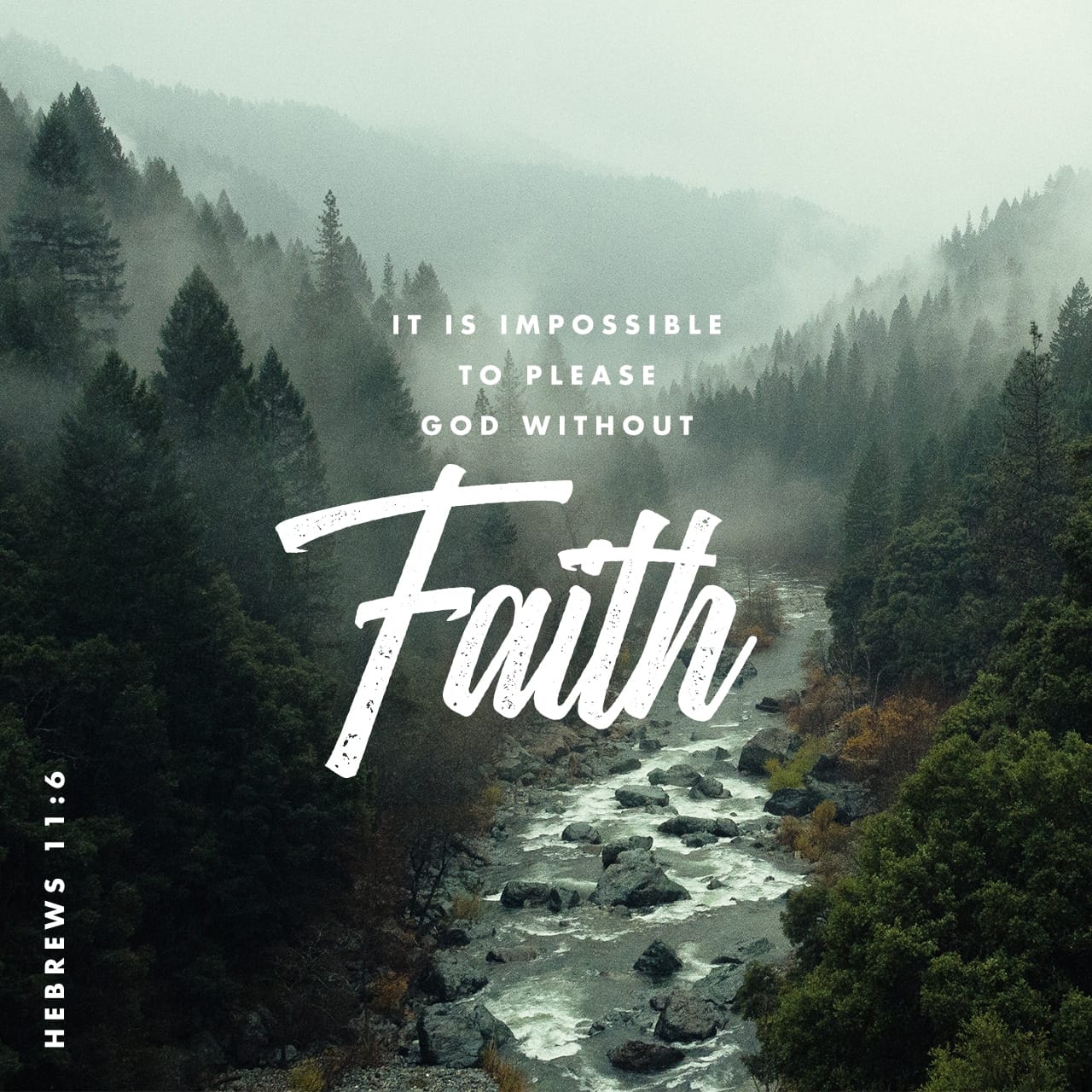 For "..
https://bible.com/bible/59/heb.11.6.ESV
Faith says God is who he claims to be. To not believe His claims
_____________________________________
¹faithful pursuit of God usually feels more like death than life. This is what Christ meant when he said, "..
²knowing and believing are interchangeable.
³we miss the reward of knowing God, who is the source of life, love, and all things.
Thursday, September 19, 2019
Deep longings
Deep longings - desiring what this life cannot provide - indicate something vital is ¹missing.


Even as God's child, with perfect access to God and perfectly loved by him, we do not ²yet fully "have" Him (or does he have all of us, our total heart) . Without being fully "glorified" (unlimited) we cannot withstand his unfettered presence. We now see him through a glass darkly - by faith, not by sight. One day we will see him face-to-face. When we do we will be like him; fully glorified, fully alive, fully ³able to behold and experience firsthand his infinite majesty, fully freed from all pain and sorrow as we were originally designed , but not until then.
1Pe 1:8 Though you have not seen him, you love him. Though you do not now see him, you believe in him and rejoice with joy that is inexpressible and filled with glory,
Joh 20:29 Jesus said to him, "Have you believed because you have seen me? Blessed are those who have not seen and yet have believed."
For a further discussion on longings, click here
On longing for perfect love (a poem) click here
For a further discussion on how a key part of hell is unfulfilled longings click here.
For a further discussion on longings, click here
For a further discussion on how a key part of hell is unfulfilled longings click here.
________________________________________ Footnotes:
¹Even those who can gain all they desire in this life find something is still missing. Suicide and death by reckless living, such as substance abuse, are just as prevalent among the rich and famous, if not more so. Getting what you think you need and want can be more maddening than hoping for it but not yet having it. People who reach the top of the economic and/or social ladder get there because their desire for something missing - and their ability to get it - is greater than others. Once you have what you thought would fulfill you and it doesn't, where do you go now that you are "at the top?"
²But, because of Christ's resurrection - this is our proof and evidence we will too one day.
³The greatness of God is such that to behold him in our present limited ("unglorified") state would literally kill us. Imagine, if you can, how great God must be that it requires we be in a state or form so different-- yet still us - that we would die otherwise. Truly eye has not seen nor ear heard what God has in store for those who love him.
²But, because of Christ's resurrection - this is our proof and evidence we will too one day.
³The greatness of God is such that to behold him in our present limited ("unglorified") state would literally kill us. Imagine, if you can, how great God must be that it requires we be in a state or form so different
Recall those times things were so good you felt you would pop if they got any better? That will be us with God in eternity but many times over. Our capacity for infinite love will be greatly expanded and forever increasing throughout eternity, without interruption. It is hard to comprehend, but this is the picture painted for us.
Why forever increasing? Because we are finite and God is infinite. We will never reach the full height, width, length, or depth of God in all his glory and love because there is no end to Him... He is endless. We will forever increasingly discover the depth and richness of God. As the saying goes, there is "never a dull moment" once we enter eternity.
Why forever increasing? Because we are finite and God is infinite. We will never reach the full height, width, length, or depth of God in all his glory and love because there is no end to Him... He is endless. We will forever increasingly discover the depth and richness of God. As the saying goes, there is "never a dull moment" once we enter eternity.
Wednesday, September 11, 2019
Grace in the Old Testament?
Abraham trusted God and believed God's promise and was thereby justified simply by believing vs doing anything righteous -- any good and right deeds. That is grace and good news aka the gospel. In fact, he was often unfaithful, unrighteous, and regularly acted out of fear instead of trust, yet God remained faithful to the promise he made because Abraham believed in/trusted God who made it.
Gal 3:8 And the Scripture, foreseeing that God would justify the Gentiles by faith, preached the gospel beforehand to Abraham (before Christ's crucifixion actually occurred), saying, "In you shall (in the future) all the nations be blessed."
And what is that blessing? That salvation - justification - by faith will be available to all nations, Jews and Gentiles alike. It is the good news that righteousness is a gift received by faith, not something we must earn.
 Gen 15:6 And he (Abraham) believed the LORD (what the Lord promised), and he counted it (his belief/trust) to him as righteousness.
 Gen 12:2-3, 13:16, Gen 15:5, Gen 17:5-6, Gen 18:18, Gen 22:17-18, Gen 24:35, Gen 26:4,Gen 27:29, Gen 28:3, Gen 28:14; Gen 35:11, Gen 46:3
The life of Joseph would also be an example of this good news. God was committed to and brought about Joseph's best even in spite of his poor choices -- as well as his father's and brothers' poor choices -- and in the midst of all the subsequent difficulties. Why? Because Joseph trusted God. Even in the midst of all Joseph's weaknesses and flaws, God was faithful to him and Joseph remained true to God i.e. full of faith/faithfulness. God's working in his life was not deserved i.e. not the result of Joseph being perfect in all his conduct. God's working was because of the kindness and wisdom of God i.e. by grace.

We are told in both the Old and New Testament that "the just shall live by faith" Habakkuk 2:4; Romans 1:17; Galatians 3:11; Hebrews 10:38
So what's the difference between the Old Testament (Covenant) and the New Testament (Covenant)?
The justification promised in the OT was accomplished and fulfilled in and by Christ. For us this is no longer a future promise but a past reality. Therefore we are not only justified by faith but also now have His Spirit of perfect love living in us -- the Spirit no longer just comes upon us but indwells us. Because of the work of Christ, when we accept his gift of perfect standing (righteousness) before God, we are declared clean vessels, fit for God to dwell in. Believers no longer look to the promise of a future event that will someday make them clean but to a past event that has already provided that cleansing once accepted.
The justification promised in the OT was accomplished and fulfilled in and by Christ. For us this is no longer a future promise but a past reality. Therefore we are not only justified by faith but also now have His Spirit of perfect love living in us -- the Spirit no longer just comes upon us but indwells us. Because of the work of Christ, when we accept his gift of perfect standing (righteousness) before God, we are declared clean vessels, fit for God to dwell in. Believers no longer look to the promise of a future event that will someday make them clean but to a past event that has already provided that cleansing once accepted.
As a result, His law is now written on our hearts and in our minds (Heb 8:10-12; 10:16-18). This was a promise made through the prophets and fulfilled in and by Christ. In other words because of the work of Christ for us -- he remembers our sins no more -- his Spirit is now living within us, reveals to us the significance and extent of that work, stirring in our hearts a love and trust for God and his word(s) we did not have before. His Spirit is now constantly revealing more and more of Christ to us in all His beauty, love, and glory (2 Corinthians 3:17-18) which causes us to trust him more and more, creating within us an increasing desire to obey him. It is God (by his Spirit) who now works from within us (not just on us as He did in the OT) both to will (desire) and do (empower to obey) of his good pleasure (Phil 2:12-13). To say it concisely, the things we are commanded to do we now want to do because we love and trust the one who commands us. This is now true of all believers. If it is not, we have not yet truly seen His love for us.
For a further discussion on the difference between religion and the gospel click here.
For a further discussion on the difference between religion and the gospel click here.
For a discussion on the difference between cultural "Christians" and grace-driven believers click here.
Saturday, August 31, 2019
Identity politics and God's word.
One of the subtle issues of ¹Dispensational Eschatology is "identity politics."
It's not obvious on the surface, but when you look closely, this teaching places a certain nation/race on a pedestal above all others. The Jewish race. The nation ofIsrael
It's not obvious on the surface, but when you look closely, this teaching places a certain nation/race on a pedestal above all others. The Jewish race. The nation of
The irony is if this high view were held toward any other race - such as Hitler's so-called Ayran race - It would be racist, and people would rightly be up in arms protesting.
 I am not suggesting at all that Israel was unimportant or insignificant. They certainly were and played a unique and vital role in God's plan of redemption, as well as on the stage of human history. Nor am I suggesting we should not ²support national Israel today. Any nation that promotes freedom, especially if surrounded by a region of hostility toward that freedom, deserves our ²support. But to accurately assess national Israel's true significance in God's eyes, we must explore God's words in the bible. God must be true even if every man is a liar.
 I am not suggesting at all that Israel was unimportant or insignificant. They certainly were and played a unique and vital role in God's plan of redemption, as well as on the stage of human history. Nor am I suggesting we should not ²support national Israel today. Any nation that promotes freedom, especially if surrounded by a region of hostility toward that freedom, deserves our ²support. But to accurately assess national Israel's true significance in God's eyes, we must explore God's words in the bible. God must be true even if every man is a liar.
 ³If you wish to explore this more click here.
If someone does not view Israel as superior to other nations some will object and ask "Isn't the nation of Israel God's chosen people; special above all others?" The short answer is yes, but to answer that question properly and completely, we must ask the bigger underlying questions. e.g. to what end was
The longer answer is they were chosen to be the nation through which the promised Messiah came, and he did (though orthodox Jews believe the Messiah's coming is still in the future). And He came not just as the Deliverer of the Jews only, but the Savior of the entire world. For a more thorough discussion on this click here.
The general issue with identity politics.
What does any of this have to do with identity politics? In essence, identity politics says one's individual value or worth is determined by one's group, race, nationality, etc. However, when you follow this through logically, isn't this in fact at the heart of racism - i.e. one group or race being superior (or inferior) to others. This is saying I am better (or worse) than you simply because I belong to a particular race or group. Or, I can do no wrong because I belong to a certain group e.g. a person of color - any color or lack of it - can't be racist because they are the victim of racism. A certain group could get away with many things others would never be able to do if they were considered superior to others.
What does any of this have to do with identity politics? In essence, identity politics says one's individual value or worth is determined by one's group, race, nationality, etc. However, when you follow this through logically, isn't this in fact at the heart of racism - i.e. one group or race being superior (or inferior) to others. This is saying I am better (or worse) than you simply because I belong to a particular race or group. Or, I can do no wrong because I belong to a certain group e.g. a person of color - any color or lack of it - can't be racist because they are the victim of racism. A certain group could get away with many things others would never be able to do if they were considered superior to others.
But this is not true, no matter who asserts it. This is a form of group or ethnic supremacy if you will. Not unlike the "white supremacy" label we hear thrown around today. A kind of ⁴ethnic-based identity -- exactly the opposite of the message of grace.

In God's economy, identity is based on something much greater and far more significant. God calls us to ground our identity in who we are as His image-bearers first, as well as ⁵who he has made us to be in Christ, not in our ethnicity, group, gender, culture, worldview, etc. The teaching of the Bible shatters all boundaries of race, gender, or any other difference.
Gal 3:25 But now that faith has come, we are no longer under a guardian,
Gal 3:26 for in Christ Jesus you are all sons of God, through faith.
Gal 3:27 For as many of you as were baptized into Christ have put on Christ.
Gal 3:28 There is neither Jew nor Greek, there is neither slave nor free, there is no male and female, for you are all one in Christ Jesus.
Gal 3:29 And if you are Christ's, then you are Abraham's offspring, heirs according to ⁴promise.
The above "group" - God's group if you will - is the only group we can ultimately and legitimately base our identity on. Being part of this group has nothing to do with race and everything to do with grace.
This is not a point of pride, but of humility, since it's based on grace and not our ethnicity, culture, efforts, some assumed "birthright" or anything that has to do with humanity seeking to bolster their identity apart from and outside of God, their Creator.
This is also unifying because being an image-bearer of God includes everybody, so in this sense -- the way most define a group -- it is not a group at all because we all belong to it.
Also, being remade in Christ's image is available to anybody and will be denied to no one who desires to enter onto this path i.e. it excludes no one and is freely offered to anyone.
These aspects of our identity are determined by no less than God Himself -- the Creator of us all -- making them the only legitimate grounds for our identity and of far greater significance than anything offered or asserted by men.
Ironically, those who scream ⁶loudest about racism are usually those who look at the world exclusively through an "identity politics" - i.e. racial - filter. The problem is that this creates an "us-them" mindset and division instead of unity.
A lot of accusations about who is being more divisive are thrown around these days. However, if we stop and think about it, we will find identity politics at the heart of this divisiveness, not racism in the classical sense e.g. whites vs blacks, Aryans vs Jews, etc. Those who are least racist are the least likely to think in racial terms - e.g. I am not a brown, white, or black woman or man I am simply a fellow human being created in the image of God, just like you are, regardless of race, gender, age etc.
The truth is we are all created in God's image, and our value is not rooted in our group, race, nationality, or gender...at least not in God's eyes (this, of course, includes Jews). So in the most basic and vital sense, as bearers of God's image, we are all the same in the eyes of God; we are all ⁷equally created to know and experience God in all his beauty, majesty, love, and goodness. We are all members of the human race who have equal access to God in and through Christ and are equally valued by God regardless of group, race, gender, etc.
A lot of accusations about who is being more divisive are thrown around these days. However, if we stop and think about it, we will find identity politics at the heart of this divisiveness, not racism in the classical sense e.g. whites vs blacks, Aryans vs Jews, etc. Those who are least racist are the least likely to think in racial terms - e.g. I am not a brown, white, or black woman or man I am simply a fellow human being created in the image of God, just like you are, regardless of race, gender, age etc.
The truth is we are all created in God's image, and our value is not rooted in our group, race, nationality, or gender...at least not in God's eyes (this, of course, includes Jews). So in the most basic and vital sense, as bearers of God's image, we are all the same in the eyes of God; we are all ⁷equally created to know and experience God in all his beauty, majesty, love, and goodness. We are all members of the human race who have equal access to God in and through Christ and are equally valued by God regardless of group, race, gender, etc.
We see this in the Gospel of John by Christ himself when he said the following to the Samaritan women at the well...
20 (the women said) 0ur fathers worshiped on this mountain, but you say that in Jerusalem is the place where people ought to worship.” 21 Jesus said to her, “Woman, believe me, the hour is coming when neither on this mountain nor in Jerusalem will you worship the Father. 22 You worship what you do not know; we worship what we know, for salvation is from the Jews. 23 But the hour is coming, and is now here, when true worshipers will worship the Father in spirit and truth, for the Father is seeking such people to worship him. 24 God is spirit, and those who worship him must worship in spirit and truth.” 25 The woman said to him, “I know that Messiah is coming (he who is called Christ). When he comes, he will tell us all things.” 26 Jesus said to her, “I who speak to you am he.” John 4:20-26
Note Christ said he's seeking people whose heart (i.e. "... in spirit and truth...") is after him, not those who come from any particular group, race, or area i.e. not the heart of a Jew, white, black, yellow, brown, or any other specific race, but all hearts. When you understand that Samaritans were considered "half-breeds" by the Jews - not unlike the Muggle-born "mudblood", Hermione Granger, in the Harry Potter series - this conversation with a Samaritan woman becomes even more significant.
In addition, he was having a conversation with a woman. Women were considered second-class citizens by that culture and time (but obviously not by Christ). And you certainly didn't hang out with a woman alone, one on one, even in public. This was considered taboo. When you look at the context of this conversation, his disciples' response subtly hints at this taboo.
Am I saying it is wrong to love our heritage? Not at all. To the degree it honors and displays the beauty and diversity of God, it is a good thing. However, it is not the ground on which we base our identity and worth.
In addition, he was having a conversation with a woman. Women were considered second-class citizens by that culture and time (but obviously not by Christ). And you certainly didn't hang out with a woman alone, one on one, even in public. This was considered taboo. When you look at the context of this conversation, his disciples' response subtly hints at this taboo.
Am I saying it is wrong to love our heritage? Not at all. To the degree it honors and displays the beauty and diversity of God, it is a good thing. However, it is not the ground on which we base our identity and worth.
There is nothing wrong with cultural diversity. It can be a good thing to display the vast creativity of God. It is just not the ultimate thing we base our identity on.
For a discussion on why and how we must distinguish culture from race click here.
For a discussion on the image of God click here
For a discussion on Dispensationalism click here.
For a discussion on why and how we must distinguish culture from race click here.
For a discussion on the image of God click here
For a discussion on Dispensationalism click here.
For a discussion on the promises made to Abraham click here.
___________________________________
Footnotes:
¹I am not looking to single out Dispensationalism for its own sake but because of its widespread support in the evangelical Christian community, the subtle effect of this view is significant and worth mentioning.
²I'm not saying financial support necessarily but verbal or moral support assuming they (or anyone else we support for that matter) are acting morally and legitimately in self-defense.
³For more on that promise click here
⁴One group is more valuable than another because of their ethnicity, thereby deserving greater respect.
⁴One group is more valuable than another because of their ethnicity, thereby deserving greater respect.
⁵However, this does not make Christians superior to non-Christians because it is a status given to us as a gift and available to anybody who will receive it.
⁶I'm not saying there is no racism or that racism shouldn't be addressed, I'm saying those who see everything through a racial filter (identity politics) are likely the most racist. Those who don't are the most "colorblind."
To say it another way, the most racist among those who read this will probably scream loudest that this article is racist and antisemitic. To assert a person of color can be a racist is taboo or that all "whites" are not automatically racist by being white, will upset some.
⁷This also happens to be the worldview of the founders of this nation - that all men are created equal - even though not fully put into practice initially. However, this view eventually became the impetus and basis for the abolition of slavery. The foundation of truth laid in the founding documents of the "great American experiment" ultimately won out, even though a significant compromise over the equal value of the black man was initially made in order to form a union of the 13 original colonies that later became the United States of America i.e. our nation. Contrary to much of the present-day narrative, most of the founders were opposed to slavery and this compromise. An accurate and revealing depiction of this battle and compromise is shown in the second episode -- titled "Independence"-- in the HBO miniseries "John Adams."
⁶I'm not saying there is no racism or that racism shouldn't be addressed, I'm saying those who see everything through a racial filter (identity politics) are likely the most racist. Those who don't are the most "colorblind."
To say it another way, the most racist among those who read this will probably scream loudest that this article is racist and antisemitic. To assert a person of color can be a racist is taboo or that all "whites" are not automatically racist by being white, will upset some.
⁷This also happens to be the worldview of the founders of this nation - that all men are created equal - even though not fully put into practice initially. However, this view eventually became the impetus and basis for the abolition of slavery. The foundation of truth laid in the founding documents of the "great American experiment" ultimately won out, even though a significant compromise over the equal value of the black man was initially made in order to form a union of the 13 original colonies that later became the United States of America i.e. our nation. Contrary to much of the present-day narrative, most of the founders were opposed to slavery and this compromise. An accurate and revealing depiction of this battle and compromise is shown in the second episode -- titled "Independence"-- in the HBO miniseries "John Adams."
Subscribe to:
Posts (Atom)